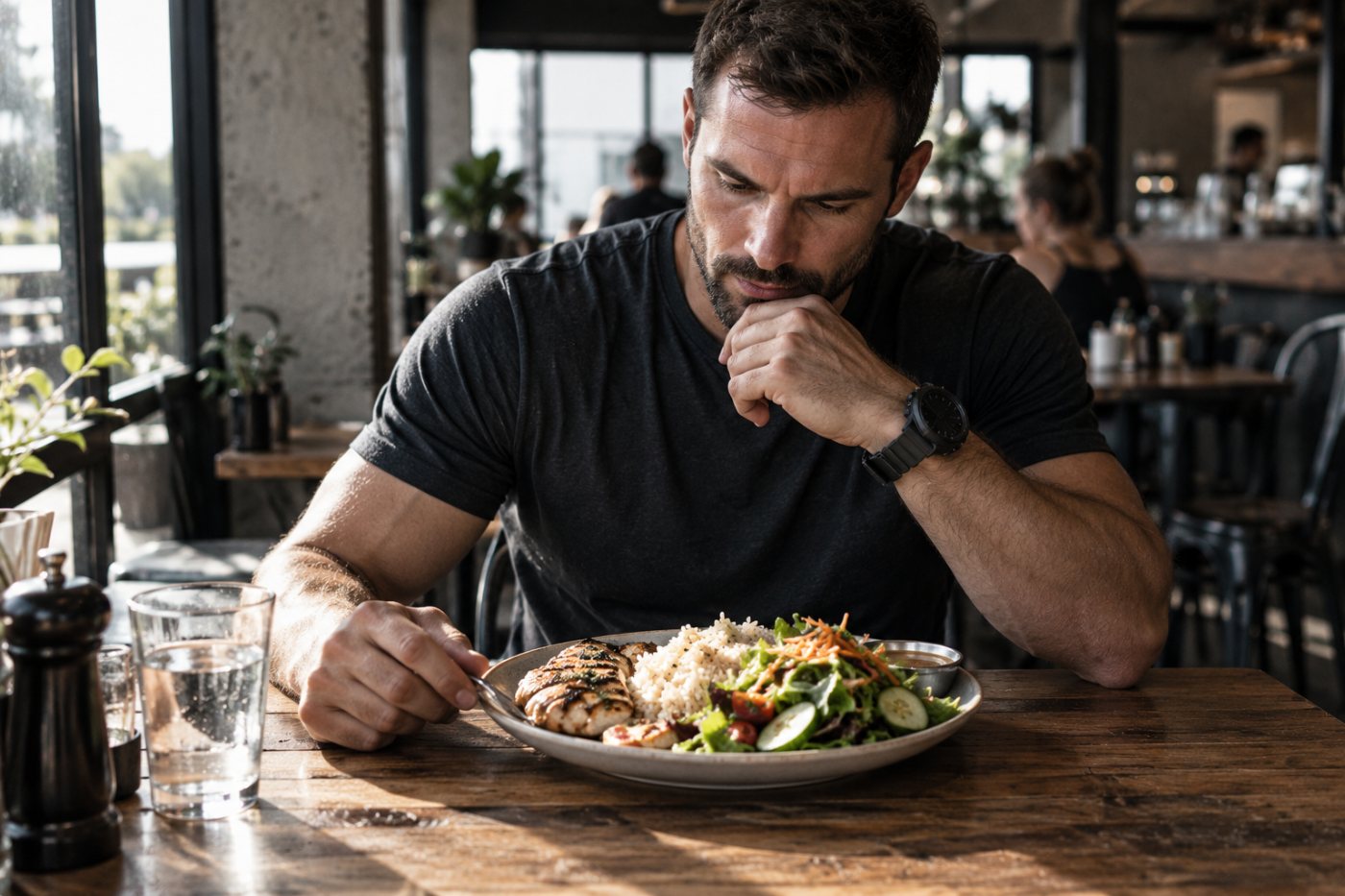
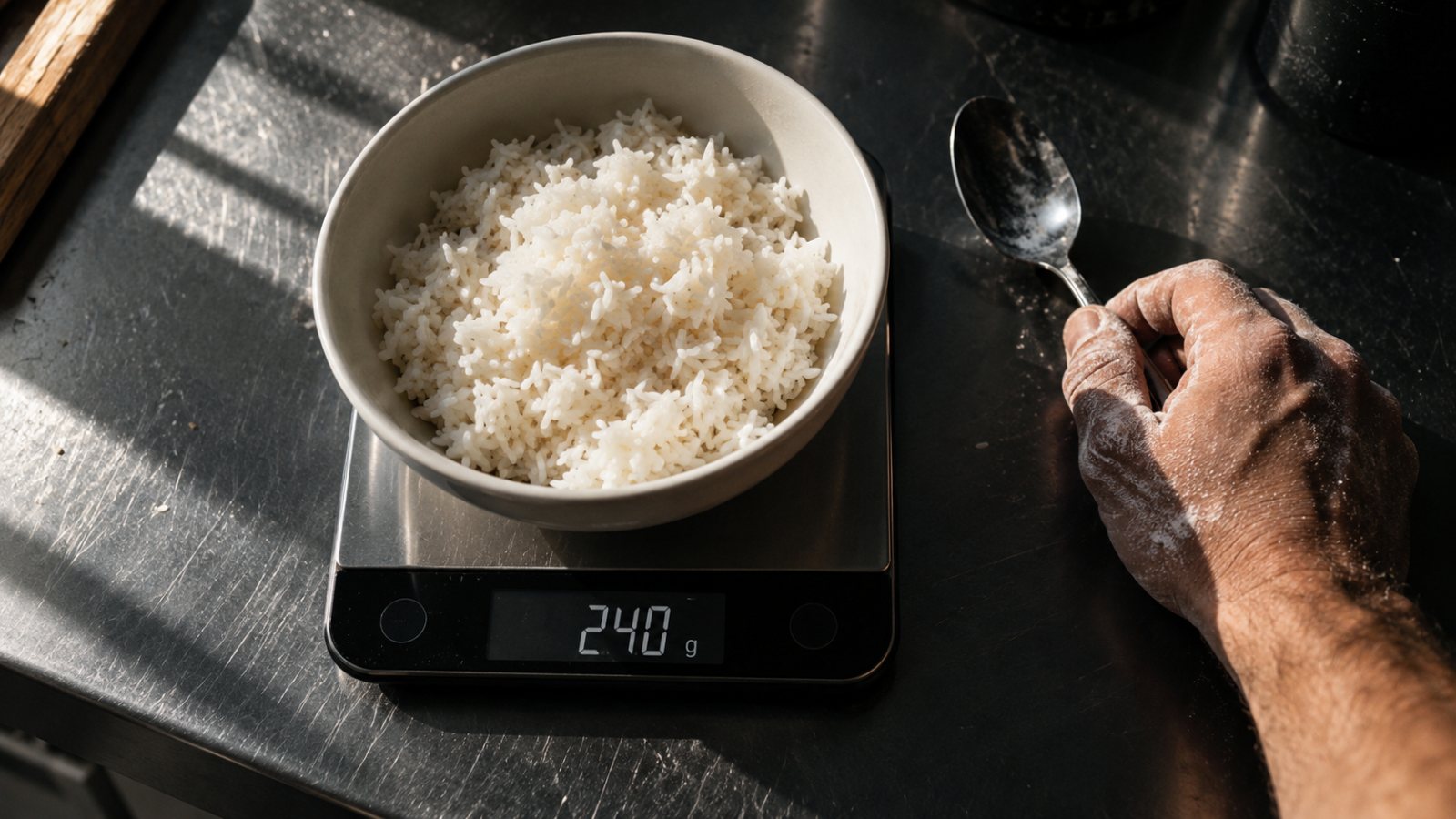
When you start the Nutrition Program, one of the first things we ask is that you weigh what you eat. Raw, in grams, on a kitchen scale. The usual reaction is a groan, then the same question: am I going to be doing this forever?
No. You weigh in the early days so you don't have to do it forever. This post is about why.
Your eye is a bad scale
Nobody eyeballs a 1RM. You load the bar, you lift it, the plates tell you the truth. Food works the same way. What you think you ate and what you actually ate are two different numbers.
The catch is that the eye isn't randomly wrong. It is wrong in one direction. Nearly everybody under-reads, and it's worst on the small, calorie-dense stuff: oil, nut butter, cheese, a "scoop" of rice. Here is a typical first week on the scale.
Illustrative, but typical. Calories are off standard food tables. Nobody here was lying. They were guessing, and the guess was short every time.
A gap like that is the whole difference between "I'm eating to my target and nothing is moving" and a scan that goes the right way. The plan was fine. The measuring was off. You can't coach a number that's wrong to start with.
That's why, while you are coached, the bar is 80% of what you log, weighed. The other 20% is for eating out and real life. We want an honest log, not a perfect one.
The scale is training your eye
Think about how you learned to squat. Early on a coach is on every rep: depth, knees, chest. You aren't going to have a coach next to you forever. The reps are building a feel, and one day you just know when a squat is right.
Weighing is the rep. Every time you put food on the scale, you see what 30 grams of oil looks like in your pan, and what 150 grams of chicken looks like on your plate. Do that a few hundred times and your eye gets calibrated. But only if you check the guess against the scale.
Weighing on its own gets you an accurate log. Guessing first and then weighing gets you an accurate log and teaches your eye. Same scale, same ten seconds.
- Serve it the way you normally wouldSpoon, pour or scoop, without looking at the scale yet.
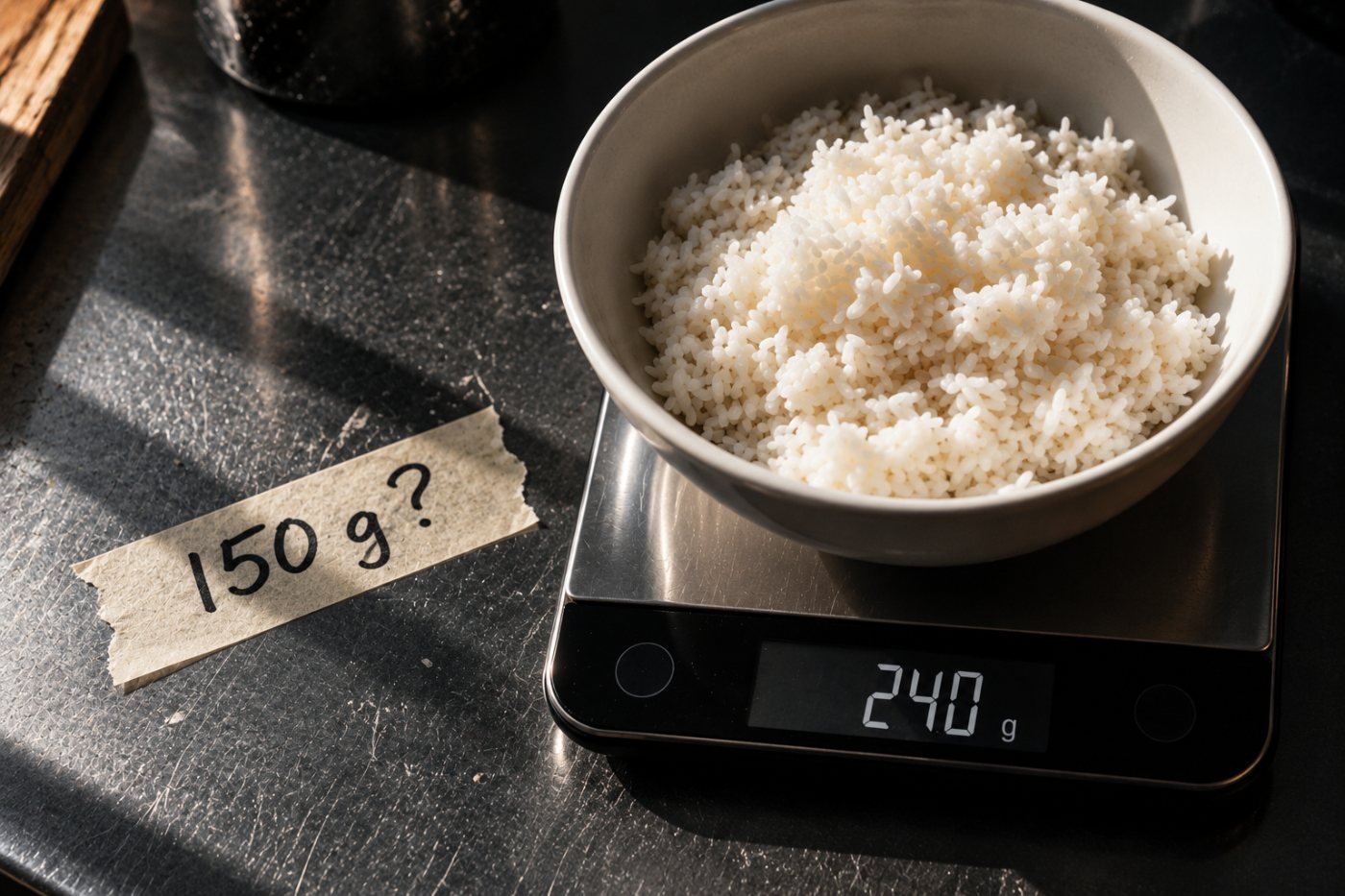
- Say your guess out loud"About 180 grams." Commit to a number. Write it on the bench with a marker if you need to.
- Put it on the scaleLog what the scale says, never the guess.
- Notice the gapOver or under, and by how much. That is the rep. Next time your hand will adjust without you trying.
The portion barely changed. The guess caught up to it. Rice took a week. Oil and nut butter take longer, because a small difference is a lot of calories.
From the scale to your eye
Nobody goes straight from weighing everything to eyeballing everything. It happens in stages, and you move on when your guesses say you're ready, not when the calendar does.
Everything at home goes on the scale. Get the habit in before anything else.
Still weighing everything, but every portion gets a guess first. This is where your eye improves.
Weigh the calorie-dense foods (oil, nut butter, cheese) and one full meal a day. Eyeball the rest.
The scale lives in the drawer. It comes out when something drifts. See section 05.
While you're coached on the Nutrition Program, the bar stays at 80% weighed. The stages are about what you do with that weighing, and what you keep once you are running it yourself.
Where the missing food hides
A chicken breast is easy to guess. The food that goes missing is the small stuff that goes in quickly and never gets logged, and it's the stuff to weigh for longest.
Eyeballing, done right
Once your eye is calibrated, the scale is a check-up, not a rule. Two tools come with you everywhere.
Your plate. You've weighed enough food on your own plates and in your own bowls that you know what a portion looks like in them. That's the most accurate eye you'll have.
Your hand. For eating out, your hand travels with you and it's roughly in proportion to you. It's not as accurate as a calibrated eye, but it's good enough for a meal you can't weigh.
When to bring the scale back out
An eye drifts the same way a squat drifts without a coach watching. Portions creep up slowly and you don't notice. Get the scale out for a week when:
- Your scan stalls for a month and you can't see why.
- You set a new goal, like cutting for a comp or a lean-out phase.
- Your kitchen changes: a move, new bowls, a new go-to recipe.
- You've been on holiday, or a busy stretch where everything was eyeballed.
A week of guessing first and then weighing is usually enough to pull your eye back in. It's quicker the second time because the skill is already there.